Perrot-Minot, Chambertin-Clos de Beze Grand Cru, Vieilles Vignes, Burgundy
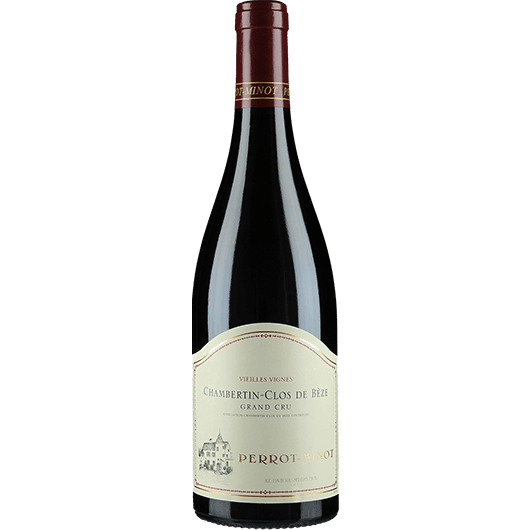
Perrot-Minot, Chambertin-Clos de Beze Grand Cru, Vieilles Vignes, Burgundy
An introduction to Perrot-Minot, Chambertin-Clos de Beze Grand Cru, Vieilles Vignes, Burgundy
Chambertin-Clos de Bèze, situated within the Gevrey-Chambertin appellation, is considered one of the most prestigious Grand Cru vineyards on the Côte d'Or. Planted entirely with Pinot Noir, the vineyard is located mid-slope, facing southeast. The soils are pebbly, free-draining limestone soils with a good proportion of clay. Perrot-Minot’s Chambertin-Clos de Bèze is produced from brought-in grapes from a small 0.8 ha parcel of 50-year-old vines just north of the Chambertin vineyard. The slightly different composition of the soils here produces a rounded, slightly fruitier style of wine, with the refinement and complexity expected from this prized Cru. This is a wine that is approachable after a few years in bottle but also rewards extended cellaring, upwards of 20 years.
Performance
Sign up for free to unlock chart data
or Sign in
Understanding Perrot-Minot, Chambertin-Clos de Beze Grand Cru, Vieilles Vignes, Burgundy
After hand-harvesting to ensure the removal of all under-ripe grapes, a proportion of whole bunch fruit is used in the fermentation, with gentle pumping over. The wine spends up to 18 months in barrel. The aim is to highlight the natural expression of the terroir, while retaining purity of fruit. This is achieved with sensitive use of new oak (30%). Darkly fruited, with an overt minerality, this wine is ethereally seductive. The production is extremely limited, around 2,000 bottles per vintage. Many of the Domaine’s Chambertin-Clos de Bèze Grand Cru vintages have achieved perfect or near-perfect scores from major critics. For instance, The Wine Advocate awarded its 2005 a score of 99-100 points. The publication wrote of the 2015, which received 95-97 points, that ‘this is a stunning 2015 from Perrot-Minot, perhaps the best in recent years’. When reviewing the 2019, Charles Curtis MW wrote that ‘the wine is approachable even now but should live for 50 years or more – a triumph’.